
1. Overview
All OpenSR plugins (IN and OUT) must implement a strict lifecycle contract defined by the core interfaces.
The host relies on this contract for:
- stability
- recovery from failures
- safe start/stop cycles
- plugin validation
Failure to respect this contract can result in:
- automatic retries
- plugin disablement
2. Lifecycle Functions
2.1 Init(…)
Purpose:
Initialize internal state and prepare the plugin for execution.
Expected responsibilities:
- Initialize member variables
- Store:
OpenSRContext*- buffer pointers
- plugin path
- Allocate lightweight resources if needed
Must NOT:
- Start threads
- Open heavy resources (network, devices, etc.)
- Block execution
Return value:
true→ initialization successfulfalse→ initialization failed
Failure handling:
- Host will retry
Init()after a delay - Delay increases after repeated failures
- Plugin may be disabled automatically after too many failures
2.2 Start()
Purpose:
Start the actual runtime behavior of the plugin.
Expected responsibilities:
- Load settings (XML or internal)
- Initialize external systems:
- network (UDP, TCP, etc.)
- device connections
- Start worker thread(s)
Must:
- Transition plugin into running state
Return value:
true→ started successfullyfalse→ startup failed
Notes:
- This is where the main logic begins
- Most plugins implement their main loop in a worker thread started here
2.3 Stop()
Purpose:
Gracefully stop runtime activity.
Expected responsibilities:
- Stop worker thread(s)
- Close:
- network connections
- device handles
- Save runtime state if needed
Must:
- Ensure all threads are properly terminated
- Leave the plugin in a safe, non-running state
Important:
- Must be safe and deterministic
- No background activity should remain after this call
2.4 Pause() / Resume()
Purpose:
Temporarily suspend and resume plugin activity.
Expected behavior:
Pause():- Set internal pause flag
- Suspend processing inside worker loops
Resume():- Clear pause flag
- Wake suspended threads (e.g., condition variable)
Requirements:
- Must be non-destructive
- Must NOT:
- destroy resources
- stop threads
2.5 Shutdown()
Purpose:
Final cleanup before plugin unload.
Expected responsibilities:
- Release all remaining resources
- Final cleanup of internal state
Notes:
- Called after
Stop() - Plugin should already be inactive
3. Lifecycle Behavior Rules
3.1 Call Order
Typical sequence:
OUT plugins:
Load → Init → Start → (Run)
     → Stop → Shutdown → Unload
IN plugins (per game session):
Init → Start → (Run while game is alive)
     → Stop → Shutdown
3.2 Reinitialization
Init()may be called multiple times (after failures)- Plugins must handle clean reinitialization
3.3 Restart Behavior
- After
Stop(), the plugin may be:- restarted (
Start()again) - or shutdown
- restarted (
Plugins must support:
- clean stop → start cycles
3.4 Health Monitoring
The host may call:
IsRunning()
Requirement:
- Must accurately reflect:
- thread state
- runtime health
3.5 Failure Policy
If a plugin:
- fails
Init()repeatedly - fails
Start() - behaves incorrectly
The host may:
- retry with backoff
- eventually disable the plugin
4. Threading Contract
All plugins must:
- Create threads in
Start() - Stop threads in
Stop() - Never leak threads beyond lifecycle boundaries
Strong requirement:
No thread must survive after Stop()
5. IN Plugin Specific Rules
- Must define:
GetTargetProcessName() - Only runs when:
- target process is detected
- Automatically stopped when:
- process exits
6. Mandatory Assets (Plugin Packaging)
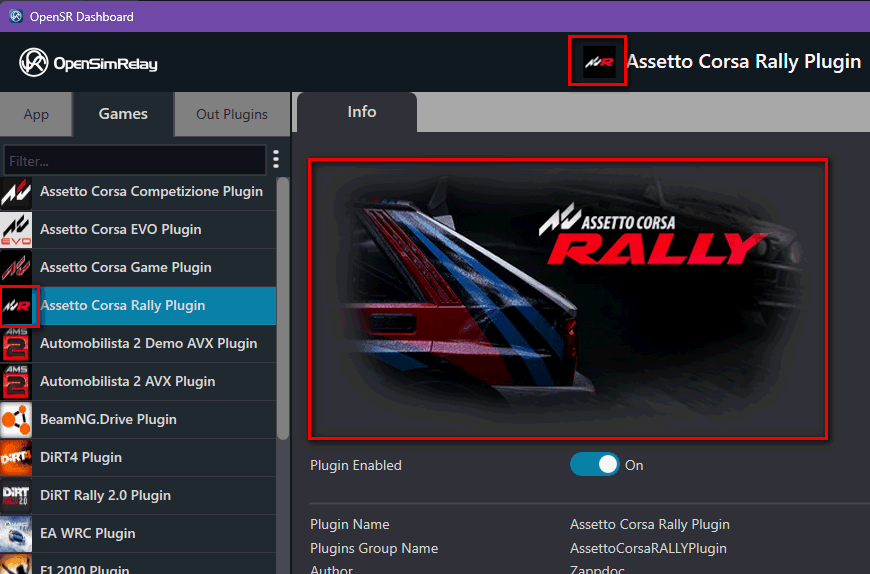
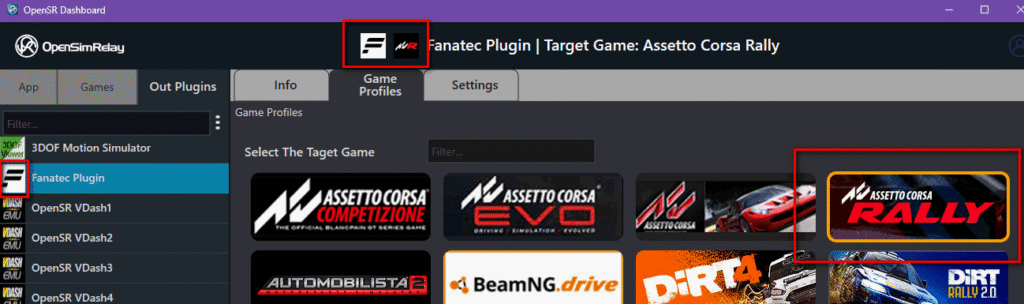
Each plugin must include:
thumbnail.png(mandatory)- Size: 228 × 86
icon.png(mandatory)- Size: 32 × 32
featured.png(recommended)- Range:
- min: 512 × 280
- max: 960 × 480
- Range:
7. OUT Plugin (Recommended Assets)
For plugins using game profiles:
profile_template.xml(mandatory)preview.jpg(recommended)
Purpose of preview:
- Visual representation of the device
- Displayed in profile UI
- Helps user understand configurable elements
8. Design Philosophy
Init()= lightweight preparationStart()= real execution beginsStop()= clean shutdown of runtimeShutdown()= final cleanup
Everything must be:
- deterministic
- restart-safe
- failure-tolerant