
1. Overview
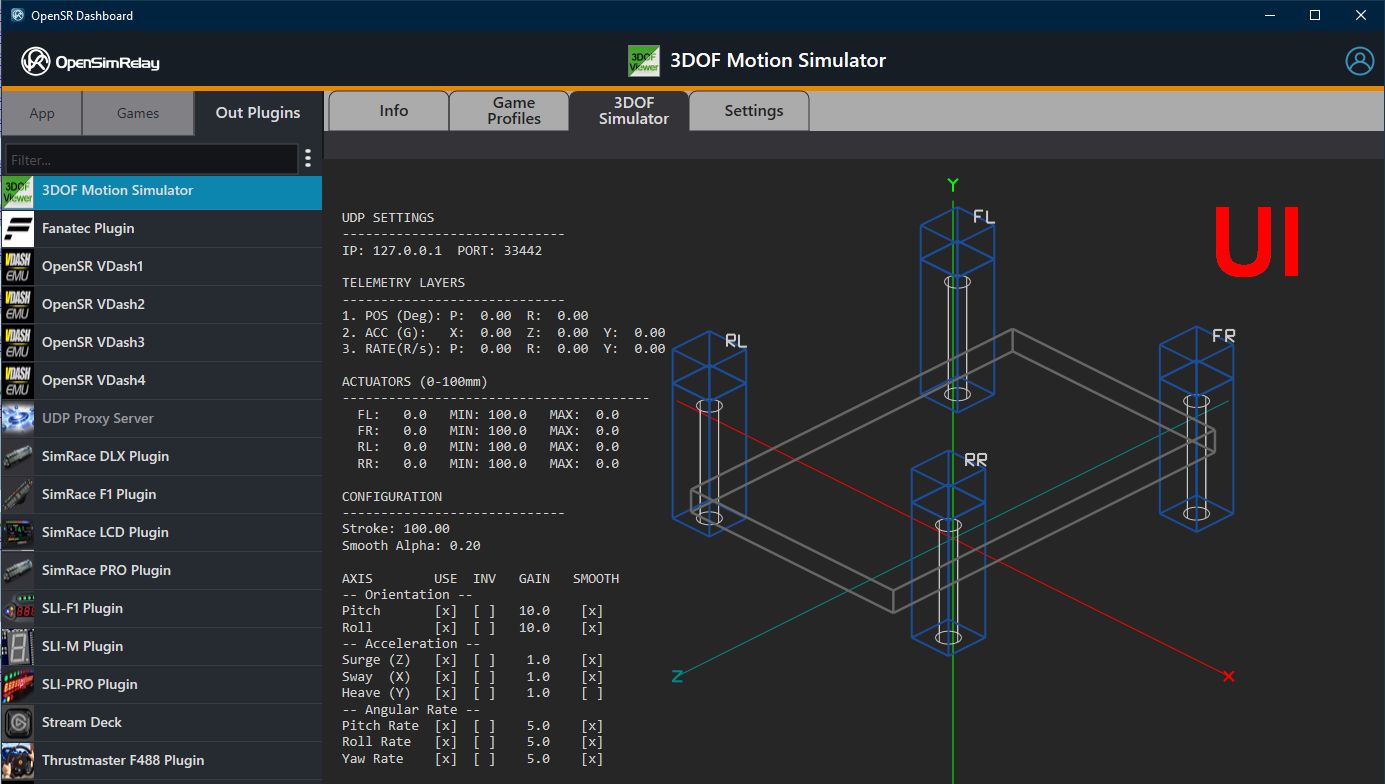
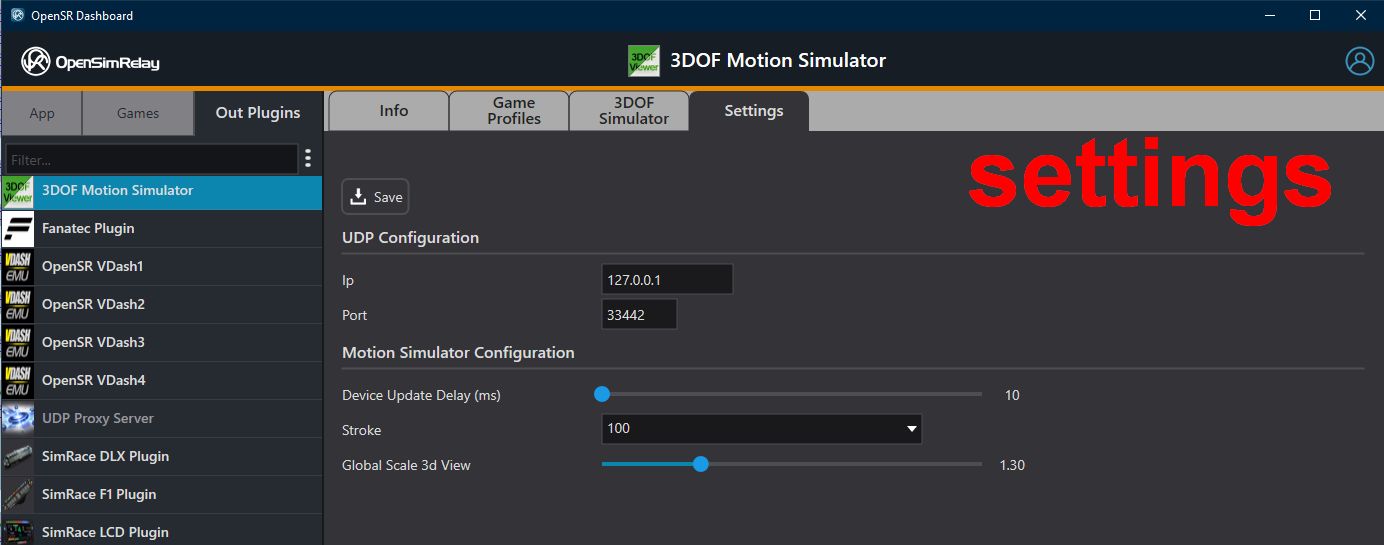
OpenSR separates runtime logic from user interface and configuration.
A plugin can optionally provide:
- a Settings module (
settings.dll) - a UI module (
ui.dll)
These modules are:
- independent from the core plugin binary
- loaded on demand by the dashboard
- fully optional
A plugin remains valid and functional without them.
2. Plugin Type Identification
Each plugin defines its category using:
int GetType();
This returns:
GAME_PLUGIN_TYPE→ IN pluginOUT_PLUGIN_TYPE→ OUT plugin
This determines:
- how the host manages lifecycle
- which buffers are exposed
- how the plugin participates in the data flow
3. UI & Settings Architecture
Key principle:
UI and Settings are not part of the runtime plugin lifecycle
They are:
- dashboard-driven
- user-triggered
- short-lived
4. Lifecycle (UI & Settings)
Both IPluginUI and IPluginSettings follow the same lifecycle:
When user opens the corresponding tab/page:
- DLL is loaded
CreatePluginUI()/CreatePluginSettings()Initialize(...)
When user leaves the page or closes UI:
Shutdown()DestroyPluginUI()/DestroyPluginSettings()- DLL is unloaded
5. IPluginSettings Interface
Purpose:
Provide a configuration interface for the plugin.
Interface:
#define _PLUGIN_SETTINGS_CHANGED  0x8410

class IPluginSettings {
public:
    virtual ~IPluginSettings() = default;

    virtual BOOL Initialize(
        HWND hWindow,
        OpenSRContext* context,
        void* buffersOut,
        const wchar_t* pluginFolderPath
    ) = 0;

    virtual BOOL Shutdown() = 0;

    virtual BOOL WantsDialogMessages() const { return FALSE; }
};
Behavior:
Initialize(...)- Receives a child window handle
- Plugin renders its UI inside it
- Has access to:
- context
- buffers
- plugin folder
Shutdown()- Called when UI is destroyed
- Returns:
TRUE→ settings changedFALSE→ no changes
WantsDialogMessages()- Enables Win32 dialog message routing (
IsDialogMessage)
- Enables Win32 dialog message routing (
To notify the plugin from Settings dll, simply PostMessage _PLUGIN_SETTINGS_CHANGED to parent window (m_hWnd member is set from Initialize() ):
BOOL ExampleSettings::Initialize(HWND hWindow, OpenSRContext* context, void* buffersOut, const wchar_t* pluginFolderPath) {
    m_hWnd = hWindow;
    m_pContext = context;
    m_pluginFolderPath = pluginFolderPath;
...
Usage:
 HWND hParent = GetParent(m_hWnd);
    if (hParent && IsWindow(hParent))
    {
        PostMessage(hParent, _PLUGIN_SETTINGS_CHANGED, 0, 0);
    }
6. IPluginUI Interface
Purpose:
Provide a runtime visualization or control panel
Interface:
class IPluginUI {
public:
    virtual ~IPluginUI() = default;

    virtual BOOL Initialize(
        HWND hWindow,
        OpenSRContext* context,
        void* buffersOut,
        const wchar_t* pluginFolderPath,
        const uint64_t sharedBuffer = 0
    ) = 0;

    virtual BOOL Shutdown() = 0;

    virtual BOOL WantsDialogMessages() const { return FALSE; }
};
Key differences vs Settings:
- Can receive an additional
sharedBuffer - Intended for passing data from UI <> plugin
7. DLL Contracts
Each module must export:
Settings:
extern "C" {
    __declspec(dllexport) IPluginSettings* CreatePluginSettings();
    __declspec(dllexport) void DestroyPluginSettings(IPluginSettings*);
}
UI:
extern "C" {
    __declspec(dllexport) IPluginUI* CreatePluginUI();
    __declspec(dllexport) void DestroyPluginUI(IPluginUI*);
}
8. File Naming Conventions
Inside plugin folder:
- UI module:
ui.dll - Settings module:
settings.dll
These names are mandatory conventions used by the host.
9. XML-Based Settings (Built-in Alternative)
If no settings.dll is provided and a :
- The dashboard automatically manages:
settings.xml
Behavior:
- Generic UI is generated by the host
- Plugin is notified via callback when values change
- No custom UI code required
Developer choice:
- Simple plugin → use
settings.xml - Advanced plugin → implement
settings.dll
10. Real-World Plugin Structure
OUT plugin example:
OutPlugins/
  3DOFViewSimulator/
    3DOFViewSimulatorPlugin.osro
    ui.dll
    settings.xml
    profile_template.xml
    icon.png
Mixed example:
OutPlugins/
  V2RController/
    V2RController.osro
    Settings.dll   // custom UI for firmware management
IN plugin example:
Plugins/
  Beam.NG.Drive/
    BeamNGDrivePlugin.osri
    settings.xml
11. Key Design Rules
- UI and Settings:
- must not contain runtime logic
- must not depend on plugin threads
- Must be:
- fast to load/unload
- safe to destroy at any time
- No persistent state should rely on UI lifetime
12. Mental Model
ui.dll→ visualization (user-driven)settings.dll→ configuration (user-driven)settings.xml→ fallback system (host-driven)